Label reading basics
How to match foundation and powder shades online
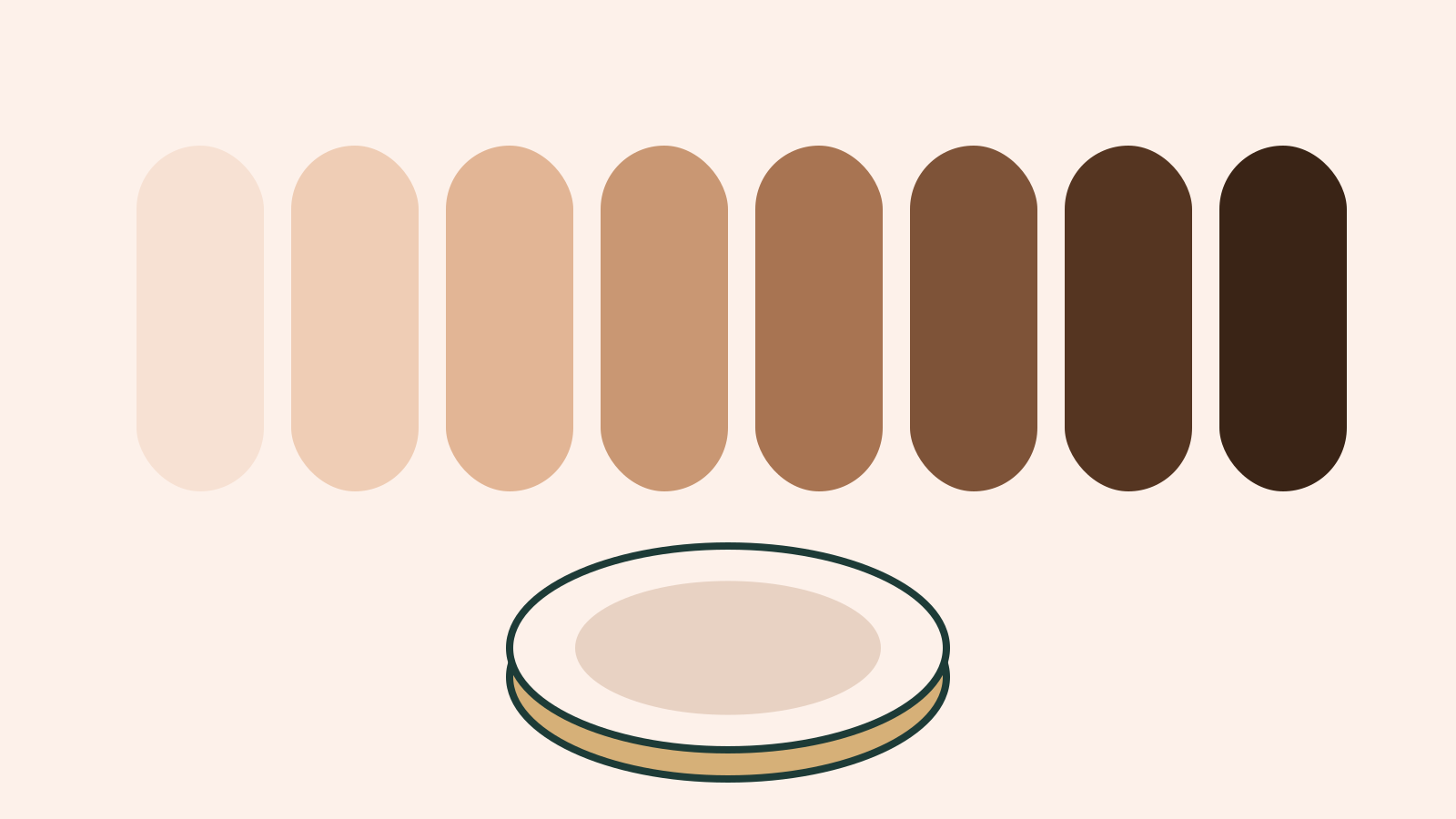
Buying foundation, concealer or powder online can feel like guesswork. Shades look different on every screen, names vary from brand to brand, and a shade that seemed perfect in a photo can arrive looking too light, too dark or slightly orange.
The good news is that shade matching is a skill you can learn. Once you know your undertone and how brands describe their shades, choosing online becomes much more reliable. This guide explains the steps.
Depth and undertone
Every shade has two parts.
Depth is how light or dark the shade is. Brands describe depth with words such as fair, light, medium, tan and deep, or with numbers.
Undertone is the color beneath the surface of your skin. It stays the same whether you are paler in winter or have a little color in summer. The three main undertones are:
- Cool: pink, red or blue hints.
- Warm: yellow, golden or peach hints.
- Neutral: a balance of both.
Many people also have an olive undertone, a green or grey hint that can make standard shades look too pink or too yellow.
Getting the undertone right matters more than getting the depth exactly right. A shade that is slightly too light but the right undertone will look more natural than the right depth with the wrong undertone.
Finding your undertone
Try these simple checks in natural daylight:
Look at your veins. On the inside of your wrist, blue or purple veins suggest a cool undertone. Green veins suggest warm. A mix suggests neutral.
Think about jewelry. If silver flatters you more, you may be cool toned. If gold looks better, you may be warm. If both work, you may be neutral.
Notice how your skin reacts to the sun. People who burn easily often have cool undertones. People who tan easily often have warm or olive undertones.
Hold up white and cream. If bright white flatters you, you may be cool. If off white or cream looks better, you may be warm.
None of these tests is perfect on its own, but together they give a good idea.
Reading shade names
Brands use different systems, but most follow a pattern.
Many use a number for depth and a letter for undertone, such as 120N for a light neutral or 330W for a medium warm. Common letters are C or P for cool or pink, W or Y for warm or yellow, N for neutral and O for olive.
Some brands use descriptive names, such as porcelain, ivory, sand, honey and espresso. These are harder to compare, so look for a note on undertone in the product description.
If you already own a foundation that matches well, note its shade name and brand. Many retailers offer shade comparison tools or charts that match shades across brands.
Choosing a finish
Finish describes how the product looks on the skin.
Matte has little or no shine. It often suits oily skin and lasts well, but can look flat on dry skin.
Satin or natural has a soft glow without shine. It suits most skin types.
Dewy or radiant has a visible glow. It often suits dry or normal skin.
Setting powders also come in finishes. Translucent powders are meant to suit many shades because they add little color. Tinted powders add a little coverage.
On Dewora, the type line on each product page tells you whether you are looking at a foundation, a powder or a concealer, and the skin type line shows who the formula is made for.
Coverage
Coverage describes how much of your skin's natural variation the product evens out. Sheer coverage lets freckles and texture show through. Medium coverage evens out redness. Full coverage hides more. Many people prefer a light or medium foundation with a separate concealer for small areas.
Test in natural light
When your new product arrives, test it before using it for a full day. Apply a small stripe along your jawline, not on the back of your hand, and look at it in daylight near a window. The right shade should seem to disappear into your skin and blend smoothly onto your neck.
If it looks slightly off, you may be able to adjust. A drop of a lighter or darker shade can be mixed in, and powder or bronzer can warm or cool the overall look.
Patch test new formulas
Apply a small amount to the inside of your arm and wait 24 hours before using a new base product on your face, especially if your skin is sensitive. If you have a skin condition or allergies, talk to a doctor or dermatologist first.
Before you order
Read the retailer listing for the full shade range, swatches on different skin tones and the ingredient list. Check the returns policy too, since many retailers do not accept opened makeup. Some offer sample sizes, which are a low risk way to test a new shade.
A quick routine
- Find your undertone in natural light.
- Note the shade name of a product that matches you well.
- Match depth and undertone using the brand's shade chart.
- Choose a finish that suits your skin type.
- Test on your jawline in daylight when it arrives.
You can compare foundations, powders and concealers in Makeup, where the table lines up type, skin type and price. Our ingredient list guide explains what to check on the back of the pack. The right shade is the one nobody notices, because it simply looks like your skin on a good day.